Tuesday, April 4, 2023

Blog #5 EOTO Comm Tech Timeline


I have chosen to research the invention of paper for this assignment because of its significance in the development of communication technologies. Prior to the invention of paper, individuals communicated through pictures and symbols carved into tree bark, painted on cave walls, and marked on papyrus or clay tablets. Recording and reading information using these methods was time-consuming, impractical, and not easily accessible. 

Paper was invented as a much more efficient and convenient alternative to these writing surfaces. The creation of paper revolutionized the way information was recorded and shared, leading to the rapid transmission of knowledge and ideas about science, literature, and culture. An article released by the American Forest & Paper Association states that paper was first made in Le-Yang, China by Ts-ai Lun, a Chinese court official. According to History.com Cai Lun, a eunuch in China's Han Dynasty, is credited as the inventor of the first real high-quality writing paper.

Cai Lun created paper by crushing and combining tree bark, hemp, linen rags, and scraps from fishing nets and then treating the mixture with lye to break it down into finer fibers. Initially, paper was used for wrapping precious objects, but soon individuals embraced its abilities. The creation of paper paved the way for the creation of books, newspapers, and magazines, and helped create a business for this information.


Johannes Gutenberg's invention of the printing press in the 15th century helped to automate the book-printing process. The printing press "stole jobs" from dozens of trained artisans who painstakingly hand-copied and illuminated manuscripts. Printed materials became more accessible and affordable with the mass production of paper. By 1702, paper was cheap enough to be designed to be thrown away after only 24 hours of use with the Daily Courant, the world's first daily newspaper.


The accessibility of paper allowed individuals to share ideas with others on a global scale. The invention of paper changed the world in many different ways, from the way we communicate to the way we store and share information. Paper is often overlooked for how commonly it is used in everyday life. Printing is only the start of paper's uses. We use wrapping paper, parchment paper, sandpaper, paper napkins, and paper receipts. We decorate our homes with wallpaper, posters, and photographs, and use it to make boxes. In the kitchen, we filter tea and coffee through it and package milk and juice in it. The world's first toilet paper was produced by the British Perforated Paper Company in the 1870s.


In an article for BBC, paper is described as "The quintessential industrial product." Thousands of years after its invention, today, paper remains an essential aspect of communication and information storage. It continues to play a vital role in the publishing, education, and packaging industries. Despite the rise of digital communication, paper is still widely used and remains a sustainable resource when made from recycled materials. China continues to be a leading producer of paper, with many companies focused on creating high-quality paper from recycled materials.


The invention of paper was a significant milestone in human history. It paved the way for the democratization of knowledge and helped to revolutionize the way information was shared and recorded. The accessibility of paper has allowed for the rapid spread of information and has helped to shape the world we live in today. While digital communication has become increasingly prevalent, paper continues to be a vital resource, with sustainable production methods ensuring that it will remain an important aspect of human communication and information storage for years to come.


Monday, April 3, 2023

Blog #4: Key Post - Eight Values of Free Expression


The Eight Values of Free Expression are used by scholars to describe why freedom of expression is so important to us as Americans.


The first two Values of Free Expression are the ones used the most by the Supreme Court. The first, Marketplace of Ideas, comes from John Milton's Areopagitica. This argues that freedom of the press is crucial because when truth and falsehood are allowed to freely grapple, the truth will win out. This grappling in turn makes the truth even stronger. When all ideas are accessible, the individual is able to sort through them and form his or her own opinions. It is never the government's job to decide your own opinion (what you view as true), therefore there should not be a requirement of a license to print or publish work. The government cannot tell you what to believe (compelled affirmation of belief) & the government cannot tell you to speak (compelled speech). 
This value feels most personal to myself as an American today. Thankfully, there are many news sources available to access to gain a broader and more balanced understanding of current events. By viewing multiple news sources, we may be able to identify biases more easily. We are very lucky to live in a country that allows journalism that is critical of the government. We are able to hear opinions from a range of perspectives that can help us form out own beliefs, not what the government tells us to believe. 
The second value, Participation in Self-Government, is described by Alex Meiklejohn in Free Speech and Relation to Self-Government. It argues if positions in government are reserved for certain people and not available for all citizens, individuals will not vote in wise and informed ways. The prerequisite for democracy is the government gets its power only through the consent of the governed, therefore if the government is censoring its citizens, how are they giving consent? 
An example of this theory in the real world was when former "Sex and the City" star Cynthia Nixon ran for New York governor in 2018. The openly gay liberal activist had never held political office when she challenged the incumbent Gov. Anthony Cuomo. According to People, Nixon is quoted saying "Women have to lead and speak up. I just think we need to have more people of color and women and LGBT people not just represented - but leading. If we want to fix out world, they know whats wrong with it because they've been on the short end of the stick." In the case of this Democratic primary, Nixon was an example of government positions being available for all citizens. After Cuomo defeated Nixon in the primary, the government got its power with the consent of the governed. 


The third Value of Free Expression is Stable Change (aka Safety Valve). Benedict Spinoza argues in Tractatus-Theologico Politicus that it is actually in the government's self interest to let its citizens to speak their mind, or "vent". This is because angry individuals will be less likely to resort to violence if they are not suppressing their feelings. It also helps governments monitor potentially dangerous groups. 
In 2021, The United States Department of Justice discovered a Florida man unlawfully used social media to deprive individuals of their right to vote. The defendant's dangerous actions allowed him to establish an audience on Twitter with approximately 58,000 followers ahead of the 2016 U.S. Presidential Election. Along with other conspirers, he encouraged supporters to "vote" via text message or social media, a legally invalid method of voting. Because politics are permitted to be discussed on social media and not censored by the government, the Justice Department was able to identify and punish this dangerous group as they acted publicly, rather than secretly. 


Individual Self-Fulfillment (aka Self-Actualization) introduced by Edwin C. Baker in Human Liberty and Freedom of Speech - Autonomy Theory describes freedom of speech as an aspect of human dignity, human agency, and autonomy. It argues that free speech enables individuals to create their own identity by having the ability to express themselves. The first amendment protects citizens inner thoughts and ideals. It allows each of us to express our own views, engage in public conversations and participate in a democratic government. 
This value feels the most personal. I am appreciative that the First Amendment grants me the right to be myself. Having my own personal ideals allows me to become more fulfilled as I can find hobbies, a career, and relationships that matter most to me. 


The fifth Value of Free Expression is Check on Governmental Power, also known as Watchdog Role. Vince Blasi expresses in Checking Function of the First Amendment that freedom of the press enables citizens to expose when the government abuses its power. If they feel so moved, they can react to the abuse during elections or in other ways. We have to be watch dogs by watching what state, local, and federal governments are doing and speaking out when we see something wrong. 
This value is evident in the actions of citizens in my home state of New York. Following an investigation by the state's attorney general, it was discovered Gov. Cuomo sexually harassed at least 11 women. Citizens spoke out, including top Democrats like Senator Chuck Schumer, leading to a loss of support for Cuomo. Ultimately, Cuomo resigned from his position as governor, ending his third term with disgrace.


Lee Bollinger argues in The Tolerant Society: Freedom of Speech and Extremist Speech that freedom of speech teaches citizens to become more tolerant in other aspects of life, in turn creating an overall better society. The First Amendment guarantees the right to freedom of expression to all Americans, including hate speech. If we start outlawing speech that we find offensive and hurtful, all types of speech become at risk. Society learns valuable lessons from hate speech as it can lead to productive conversations about social and political issues. Hate speech does not to be illegal because society has its own ways of condemning it. While hate speech may be offensive and hurtful, the First Amendment guarantees it as a right to all Americans. 
Hate speech is very prevalent in today's society. As social media has grown and grown, it has become easier than ever for individuals to express their opinions to a wide audience. It is important to recognize that hate speech on social media is becoming more and more common, as this spreads quickly and easily. The real-world consequences of hate speech on social media include physical violence and harassment. Thankfully, social media users can engage in constructive dialogue to challenge intolerance and bigotry.  


Jack Balkin describes in Living Originalism that in a society where free speech is encouraged and protected, citizens will be more creative and energized, finding fulfillment in multiple diverse and interesting ways. This will result in a society rich in new ideas and innovations. This value is important because when people are allowed to explore new and unconventional ideas without fear of punishment, they contribute to a society that is constantly evolving and improving while creating new products and services. 
Innovation is definitely promoted in the United States, a society where the First Amendment is protected. The country has a strong culture of entrepreneurship, including highly regarded universities, a successful tech industry, and advancements in scientific research. The United States remains at the forefront of technological advancement.


In Dissent, Injustice and the the Meanings of America Steve Shiffrin explains that the First Amendment protects minority opinions, even if they are unpopular. Our system is designed to prevent mob rule. In reality, it is an individual's patriotic obligation to criticize the government.
In our democratic society, citizens have the voice to hold the government accountable for its actions. March For Our Lives is a prominent organization thats efforts have led to the first federal legislation on gun violence to be signed into law. After the tragedy at Marjory Stoneman Douglas High School in Parkland, Florida, the organization was founded in efforts to make sure what happened to their community never happens again. By criticizing the government's actions, the organization aims to create a safe and compassionate nation for all of us.


Tuesday, March 21, 2023

Blog #3: SCOTUS History


The overview about the Supreme Court created by the History Channel entitled "Supreme Court" informs readers about the early days of the Supreme Court, Current and Notable Supreme Court Justices and Supreme Court Cases. 


The Supreme Court of the United States (or SCOTUS), which was established in 1789 by Article Three of the U.S. Constitution, serves as the highest federal court in the country and the head of the judicial branch of government. It has the ultimate jurisdiction over all laws within the nation and is responsible for evaluating the constitutionality of those laws. I think this introduction alone is the most-important take away point of the piece. The Judiciary Act of 1789, signed into law by President George Washington, specified that the Supreme Court would be comprised of six justices who would serve on the court until their death or retirement. One of the most surprising things I learned in this article was that the first six justices made their first decision on August 3, 1791, with West V. Barnes. This was an unremarkable case regarding a financial dispute between a farmer and a family he was in-debt to. 


The six judges of the Supreme Court are nominated by the President of the U.S. and then either confirmed or denied by the U.S. Senate. The chief justice is the highest judicial officer in the nation. He or She is responsible for presiding over the Supreme Court and deciding the agenda for the justices' weekly meetings. The justice yields the authority to assign who will write the court's opinion in cases where he or she is a member of the majority opinion. He or She also presides over impeachment trials against the President of the United States. The first Supreme Court Chief Justice was John Jay. 


Another surprising fact I learned in this piece is that Congress has altered the number of justices comprising the court six times over the years. Congress set the number of seats to nine in 1869, where it has remained until today. 
 

Chief Justice John Marshall is notable for defining the relationship between the judiciary and the other branches of government. In the famous Marbury v. Madison (1803) case, he established the authority of the Supreme Court to review and rule on the constitutionality of federal laws approved by Congress. Marshall, having served for over thirty-four years as the fourth chief justice, holds the record for the longest term of anyone holding the position. 

Chief Justice Charles Evan Hughes oversaw the transformation of the court from being the protector of property rights to the protector of civil liberties during the 1930s. He notably wrote historical opinions on the freedoms of speech and press.  

Throughout the 1950s and 1960s, Chief Justice Earle Warren delivered several historical verdicts, such as eliminating school segregation (Brown v. Board of Education), establishing the Miranda rights or the "right to remain silent" warning given by police (Miranda v. Arizona), and eliminated bans on interracial marriage (Loving v. Virginia). 

Other notable justices include: William Howard Taft, the only person to hold both roles as President and Chief Justice; Thurgood Marshall, the first African American Justice; Sandra Day O'Connor, the first female justice; and Sonia Sotomayor, the first Hispanic Justice. This piece was the first time I have heard Sonia Sotomayor's name. 


In Dred Scott v. Sandford, the court denied citizenship to African American slaves in 1857. 
State segregation laws were upheld in Plessy v. Ferguson in 1896. 
World War II internment camps for Japanese Americans were permitted in Korematsu v. United States in 1944. 
In Mapp v. Ohio, the court held that evidence obtained illegally cannot be used in criminal cases. 
The court found in Texas v. Johnson that flag burning and other potentially offensive speech is protected by the First Amendment. 
The court decided in Roe v. Wade, which was overturned in June 2022, that women have a right to an abortion during the first two trimesters. 
The President cannot use their power to withhold evidence in criminal trials was decided in U.S. v. Nixon.
The court struck down state anti-sodomy laws in Lawrence v. Texas (2003).
The court revoked the U.S. government's ability to deny federal benefits to same sex couples in United States v. Windsor (2013). 
Obergefell v. Hodges (2015) was the case where the court legalized same-sex marriage across all 50 states. 

Monday, March 20, 2023

Blog #2: How revenge porn turns lives upside down

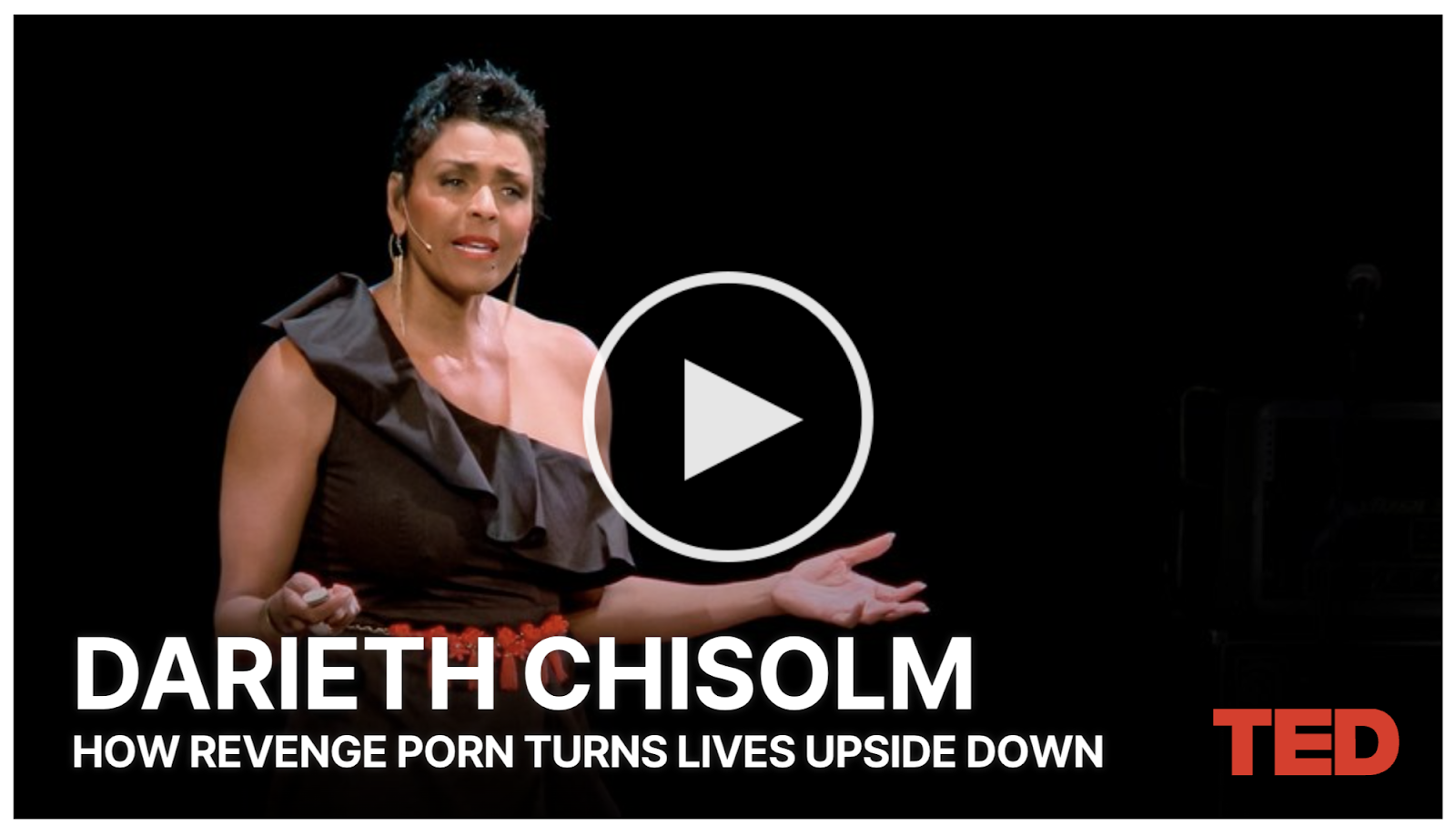
 In her Ted Talk How revenge porn turns upside down Darieth Chisolm describes her experience with revenge porn, how she's working to help victims and outlines the current legal measures aimed at punishing those who commit these crimes. 


Before she was set to deliver a talk, Chisolm received a call from her ex-husband. He alerted her that a man called him and instructed him to go to his website that was full of naked photos of her. Chisolm's ex-boyfriend had taken several explicit photos of her while she was asleep and posted them online under a website with her name without her consent. While the media calls an act like this "revenge porn," Chislom now refers to this as "digital domestic violence.""Digital domestic violence," as she describes it, typically stems from a relationship in which an ex-lover cannot physically put their hands on a victim so they resort to posting photos, videos, explicit information and content online without consent. 

Chisolm details that one in twenty-five women say they have been impacted by revenge porn. For women under the age in thirty, that number decreases to one in ten. As much as those statistics are alarming, what's worse is the lack of legislation and laws to adequately protect victims and punish the perpetrators.  There is only one federal bill pending regarding revenge porn. The ENOUGH Act by V.P. Kamala Harris would criminalize revenge porn, however that could take years to pass. Presently, the only punishment is civil misdemeanors. It's expensive, complicated, and confusing for women to get protection from cyberstalking and cyber abuse. Legal loopholes and jurisdictional issues dragged out Chisolm's case all while her private photos were on display. She eventually found a private company that issued a Digital Millennium Copyright Act notice that shut the website down. Chisolm's boyfriend was living in another country and there were no policies in place to protect victims regardless of boarders. She shared her cell phone and laptop with the Department of Homeland Security and the Jamaican Embassy three times for thorough forensic investigation. Jamaican authorities actually arrested the perpetrator and he is now facing charges under their Malicious Communications Act, and if found guilty, could face thousands of dollars in fines and up to ten years in prison. Chisolm learned her case is making history as the first international case under this new crime. 

Although Chisolm received justice, it was not an easy feat. She argues our cyber civil rights are at stake. We must demand the accountability and responsiveness from online companies as well as restore dignity to victims. She is working to film an upcoming documentary entitles "50 Shades of Silence" to give voice and dignity to victims. 

The issues discussed in this TED talk affect me because this story could truly happen to any of us. The statistics shared by Chisolm made me wonder if any of my friends are suffering through similar situations in silence. 

In the United States, the government must do something about these issues. Nobody deserves to be humiliated all while jumping through legal hoops. The government needs to demand accountability and punish those who share content without consent, even without the intent to do harm. 

In this instance, how much can we do to protect ourselves from invasions of our privacy? We should not shame those who send content that is maliciously leaked, rather shame on those for shaming them.


Thursday, March 2, 2023

Top 5 Sources of News and Information


Staying informed and keeping up with current events is of utmost importance in today's world. The evolution of social media platforms in recent years has significantly impacted the way news is consumed. While newspapers and news channels were the primary sources for news in the past, social media has become an invaluable platform for users to access a plethora of options to stay informed. As an individual who has grown up with social media, I have always had accessible sources of news at my fingertips. However with the high amount of information available, it is imperative to identify reliable sources to receive news from. 


Tik Tok has grown in global popularity as a social media app where individuals can watch user-submitted short-form videos. Tik Tok has become the main way I stay up-to-date with current events, however it is definitely not the most reliable source because its algorithm promotes content based on popularity and engagement, not accuracy. 


Snapchat's Explore page presents news in a visually engaging format. It is easy for Snapchat users to access content created by a variety of publishers and media outlets including CNN, NBC News and The Washington Post. The stories highlighted on the Explore page are personalized based on user's viewing history and interests. Individuals are able to consume news content that is fact-checked, reliable, entertaining and engaging. 


Instagram allows users to share news that means something to them using the story feature. I often see my friends post statistics and graphics relating to political movements and news which is relevant to their beliefs. Even though Instagram's explore page has an algorithm that individualizes the content released to each user, it is still an excellent source to find news about current events that may not be presented in traditional news media. 


The Pew Research Center has reported seven-in-ten U.S. adult Twitter news consumers have followed breaking news there. Twitter connects users with politicians, celebrities, and news outlets. As opposed to other social media which is used primarily to connect with friends, people on twitter are avid news consumers and regularly tweet about politics and current events. 


The Skimm is a daily email newsletter which was introduced to me by my junior year history teacher. The newsletter provides subscribers with a short, simple and easy-to-read version of the news. Although the stories are primarily accurate, I have found this source to provide a lot of biased and sponsored content.